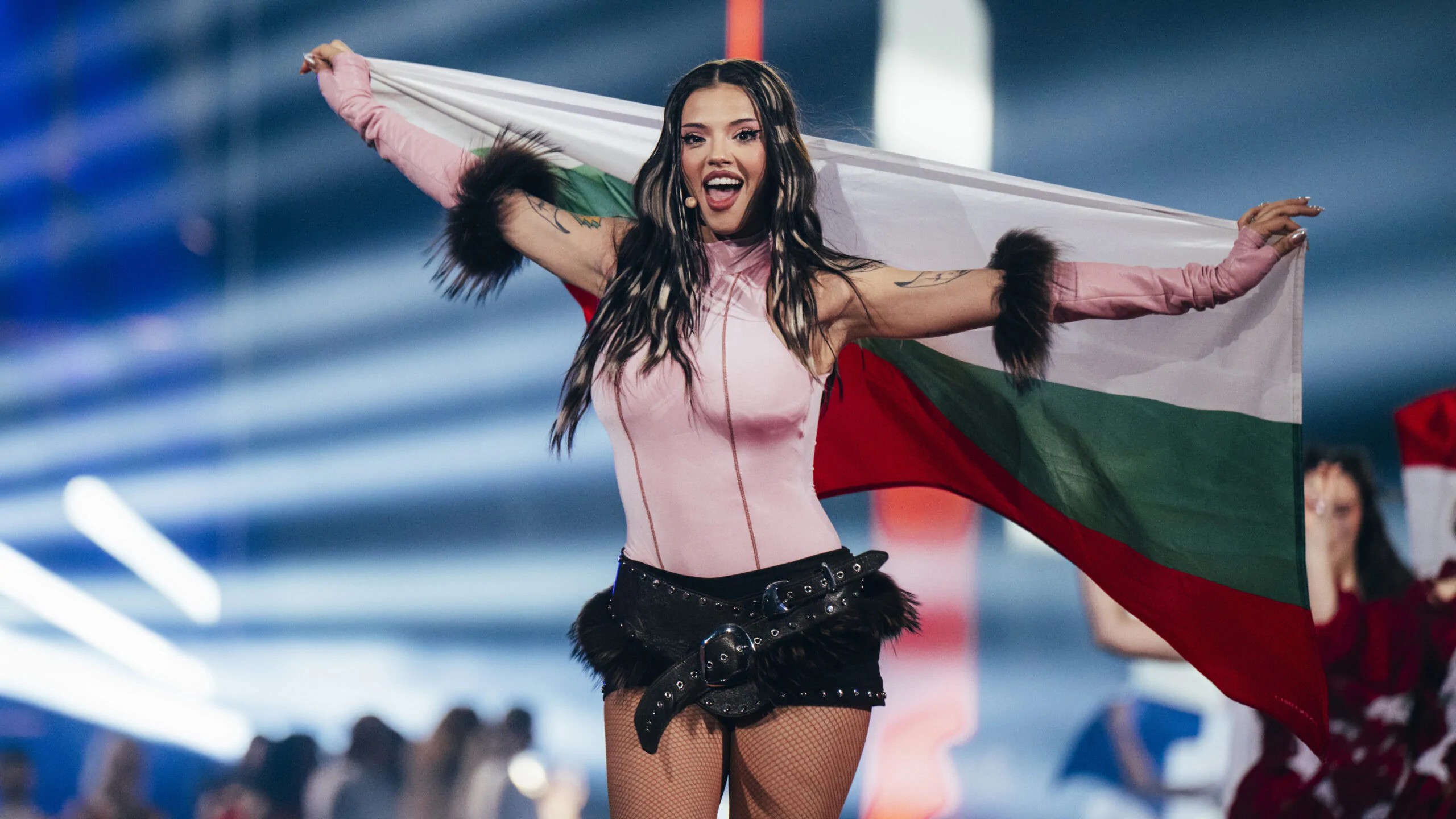
Last week, I mentioned DARA, which was not really what I planned to cover in this newsletter. I genuinely supported her, but not because of her music or style; I also don’t even care for Eurovision. But the online discourse got to me (😁) and also her personal story actually made me root for her.
Well, some of you voted for her, Europe did, and on Saturday night in Vienna we won the whole thing. First time in our Eurovision history! The country has been in a genuinely good mood since, which is rare enough that it’s worth writing about on its own. DARA landed at Sofia Airport to crowds, flowers, and Kukeri performers, which she described as feeling like “a portal had opened.” The Prime Minister welcomed her at the Council of Ministers. When he flew to Berlin, Chancellor Merz apparently greeted him by playing “Bangaranga” on his phone.
The song has done more for Bulgarian name recognition in two weeks than most official tourism campaigns manage in a decade and I say that without exaggeration. Now, about the Bulgarians who are still not happy…Before the win, the online shit show was bad enough that DARA was reportedly close to giving up entirely, not because of the competition, but because of comments from her own countrymen. The absurd, but funny “satanism” accusations, the “this is not Bulgarian music” crowd, the general hostility that a certain type of person here has specifically for young women who dare to want something big.
Some of those people flipped after the win, suddenly remembering they always supported her. Others just recalibrated and found new reasons to be against her. This is honestly a very specific local phenomenon (or so I delude myself) and I don’t think it requires much analysis. These people were miserable before she won and they will remain miserable and they will continue expressing that misery in Facebook comments while the rest of us move on. What is more interesting is what she actually did to get here. She spent over a month alone in Greece preparing, waking up at six every morning, running, meditating, nine hours of rehearsals daily. She deliberately cut herself off from social media during the competition to stay focused. Her own explanation for the win was simple: there is no magic, only work and persistence.
For a country where public discourse often defaults to the assumption that success abroad requires either luck or connections, that is actually a meaningful thing to hear from someone who just proved otherwise on a stage watched by millions of people. Bulgaria will now host Eurovision 2027 and while I’m glad about it, there are some complications. The Finance Minister announced the dedicated Eurovision budget line in the same breath as describing the state’s finances as resembling “the average Bulgarian family,” with a deficit of 1.75 billion euros by April, unpaid obligations stacking up, and what sounds like a genuinely messy inheritance from previous governments.
A proper Eurovision production costs somewhere between 20 and 50 million euros at minimum. That money has to come from a budget that is already stretched and whoever manages the organization will need to be very disciplined about what is realistic versus what sounds good in a press release. The economic case for hosting is actually solid, to be fair. Liverpool made back around 64 million euros from the 2023 edition. Estimates for Bulgaria range between 45 and 70 million net, which covers the costs if the organization is done well. Sofia will almost certainly host, it has the airport, the hotels, the infrastructure, the transport, etc. Some of the luxury hotels apparently already had conversations with Eurovision-related delegations within days of the win.
What people are less enthusiastic about is the speculative Airbnb listings that went up within hours of Saturday’s result, some advertising apartments at several thousand euros a night. I understand the impulse, I just think it is shortsighted. Tourists coming for Eurovision will remember how they were treated and the goodwill DARA spent months building is not something to burn through before the contest even arrives. DARA spoke about wanting to create a space in Bulgaria where musicians and artists from different fields could actually collaborate and build things together, which given our habit of tearing people down the moment they attempt something, sounds both necessary and optimistic. Bottom line is: the haters will find something new to complain about. Probably the Eurovision organization, probably the budget, probably something about the stage design being un-Bulgarian. They will say it on social media where they always say things and then they will watch the broadcast in May 2027 and feel something they will refuse to name.
Bangaranga, kopele!
Leave a comment