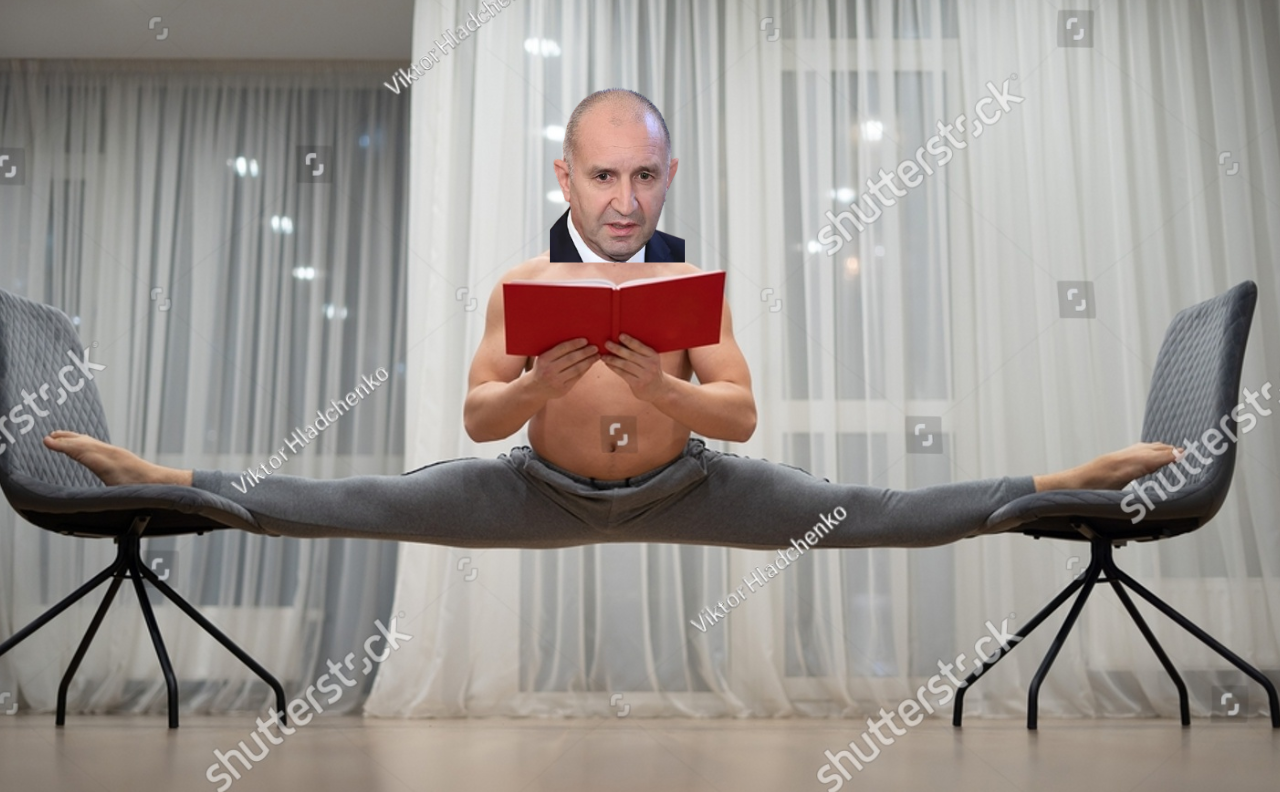
Rumen Radev is trying to sit on two chairs at once, and so far he’s managed to annoy the people holding both of them.
In Paris, Radev declined Macron’s invitation to the Coalition of the Willing and declared Bulgaria doesn’t belong in a format that keeps arming Ukraine. A day later his foreign minister backed a declaration in Kyiv committing Bulgaria to that exact coalition, with a line about strengthening participation. Then came a statement that the declaration is non-binding, the summit was informal, and finally, from Radev himself, she never signed anything at all. Asked point-blank whose side Bulgaria is on, Petrova named Russia as the aggressor, said we’re not neutral, and left without saying what outcome we actually want.
Nobody is impressed. Brussels isn’t: Renew Europe’s leader called the Paris statement openly anti-European and a serious political mistake. Latvia’s prime minister put it more bluntly, lumping Bulgaria with Greece and asking: do you want to make money or do you want peace? You can’t have both. The rusophiles at home aren’t buying it either. Revival attacked the government over the Kyiv declaration and the 33 million leva for Ukraine in the same breath. And here’s the best part: even Moscow refuses to read it as friendship. Zakharova’s verdict was that Bulgaria isn’t turning toward Russia, it’s simply too weak to keep helping Ukraine. Russia still lists us as an unfriendly state. So the balancing act has earned Radev the label of Kremlin servant from one side, NATO puppet from the other, and “too weak to matter” from the country he’s supposedly courting. A true achievement!
I (kind of) understand what Radev is doing. He wants to pull Bulgaria a step back from the Western consensus without planting a flag on Russia’s side. Keep the doors open, as his people put it. And there’s history to that instinct. Bulgaria has spent much of its existence trying not to choose, wriggling between empires, joining wars reluctantly and on transactional terms. Boris III’s Bulgaria fought alongside Germany but never declared war on the Soviet Union. “Bulgaria first”, let’s say. Sometimes it bought us time. More often the bill came later and it was steep: catastrophes after both world wars, occupation, four decades behind the Iron Curtain.
The middle of the road only works when nobody’s driving down it. Right now everybody is. We’re in the EU, in NATO, in the eurozone since January. There is no neutral lane left, only the appearance of one, purchased with trust that took thirty years to build.
Will it pay off? Maybe with voters in November. Abroad, the invoice for sitting on two chairs always arrives eventually. It’s usually addressed to the next generation.

Leave a comment